

Introduction
Women’s health is about far more than a single yearly checkup. It covers everything from routine screenings and family planning to pregnancy care and management of conditions that can affect quality of life at any age. Finding the right Gynecologist in Deira means finding a doctor who treats women’s health as an ongoing relationship rather than a one-off appointment. This blog looks at what comprehensive women’s health care should actually include, so you know what to expect and what to ask for.
Why Comprehensive Care Matters
Many women only visit a gynecologist when something feels wrong, but a lot of value comes from regular, preventive visits that catch problems early or rule them out entirely. Comprehensive care means a doctor who looks at your full health picture, including menstrual health, reproductive planning, hormonal changes, and general wellbeing, rather than addressing only the specific complaint you came in with.
What Services Should a Gynecologist in Deira Provide for Complete Women’s Health
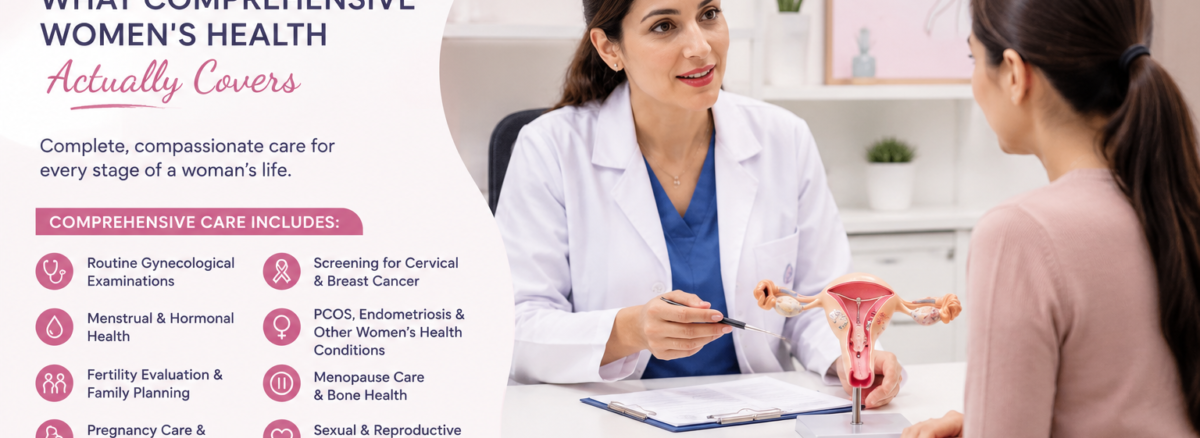
A complete women’s health service should include routine gynecological exams, cervical screening, breast examinations, family planning and contraception counseling, management of menstrual irregularities, and support through pregnancy from the earliest stages. It should also cover menopause management and screening for common conditions like fibroids, endometriosis, and polycystic ovary syndrome, since these are frequently underdiagnosed when care is fragmented across different providers.
Routine Screening and Preventive Checks
Preventive screening forms the backbone of good women’s health care. Regular cervical screening helps detect changes early, before they develop into anything serious. Breast examinations, along with guidance on self-examination and when to consider imaging, help catch changes at the earliest and most treatable stage. These checks are quick, generally painless, and make an enormous difference in long-term outcomes when done consistently.
What Does a Gynecologist Check at a Women’s Health Appointment
A typical appointment usually includes a discussion of your menstrual cycle and any symptoms, a pelvic examination, blood pressure and general health checks, and screening tests appropriate to your age. The doctor will also ask about family history, current medications, and any concerns you may have, since these details shape the specific tests or referrals recommended for you.
Pregnancy Care and Newborn Support
For women who are pregnant or planning a family, ongoing care extends well beyond delivery. A Newborn Care Consultation Dubai service is often part of a truly comprehensive women’s health offering, supporting new parents through the early weeks with guidance on feeding, growth monitoring, and general newborn wellbeing. Having this support connected to the same clinic that managed your pregnancy creates continuity that many new parents find genuinely reassuring.
- Routine gynecological exams and cervical screening
- Breast health checks and imaging referrals when needed
- Family planning and contraception counseling
- Pregnancy care from early stages through delivery
- Menopause management and hormonal health support
- Newborn care consultations for new parents
Building an Ongoing Relationship with Your Doctor
Seeing the same gynecologist over time allows them to track changes in your health more accurately and notice patterns that a new doctor might miss. This continuity becomes especially valuable during pregnancy, perimenopause, or when managing a chronic condition, since your doctor already understands your history and can adjust care accordingly rather than starting from scratch at every visit.
Managing Chronic and Hormonal Conditions
Comprehensive care also means ongoing management of conditions that can persist for years, such as polycystic ovary syndrome, endometriosis, or thyroid-related hormonal imbalances that affect the menstrual cycle. These conditions often require more than a single consultation to manage well. A doctor who understands your full history can adjust treatment over time, track how symptoms change, and coordinate with other specialists when a condition affects more than just reproductive health.
Mental and Emotional Wellbeing as Part of Care
Women’s health also intersects closely with emotional wellbeing, particularly around major life stages like pregnancy, postpartum recovery, and menopause. A truly comprehensive approach acknowledges this connection, creating space during appointments to discuss mood changes, sleep difficulties, or anxiety related to hormonal shifts, rather than treating these as separate from physical health entirely. Addressing both together often leads to better overall outcomes than treating physical symptoms in isolation.
Choosing a Clinic That Feels Right for You
Beyond clinical expertise, comfort and trust with your doctor matter enormously in women’s health, given how personal many of these conversations can be. Look for a clinic where staff take time to listen, explain things clearly without rushing, and create an environment where you feel comfortable raising concerns, even ones that might feel embarrassing or minor. This comfort directly affects how open and honest you can be, which in turn affects the quality of care you receive.
Conclusion
Comprehensive women’s health care means having a doctor who supports you through every stage of life, not just when something goes wrong. A trusted Gynecologist in Deira brings together preventive screening, reproductive health, pregnancy care, and newborn support under one roof. GIMC offers this complete approach to women’s health, giving patients continuity of care and the confidence that comes from being genuinely known by their doctor.