
Introduction
Recovering fully from an injury depends heavily on the quality and structure of the rehabilitation program you choose, not just the injury itself. With so many options available, finding the right Rehabilitation Therapy Services After Injury can feel overwhelming. This blog breaks down exactly what to look for so you can choose a program that actually supports a full and lasting recovery.
Why the Right Program Makes a Real Difference
Rehabilitation is not a passive process. The structure, pacing, and expertise behind your program directly affect how well and how quickly you recover. A poorly matched program can leave you plateauing early or, in some cases, risking re-injury by progressing too quickly. A well-designed program, on the other hand, adapts constantly to your progress and keeps you moving steadily toward full recovery.
How Do You Choose the Right Rehabilitation Therapy Program After an Injury in Dubai
Start by looking at whether the program is built around your specific injury rather than a generic template, whether the therapists have experience with similar cases, and whether progress is tracked with clear, measurable goals. It also helps to ask how the program handles setbacks, since recovery rarely moves in a perfectly straight line, and a good program adjusts rather than sticking rigidly to an original plan.
Assessing Your Specific Injury
Every injury behaves differently depending on its severity, location, and your overall health and activity level. A proper rehabilitation program starts with a thorough assessment, sometimes involving imaging or referral to an Orthopedic Doctor Appointment Dubai specialist, to fully understand the extent of the injury before building a treatment plan. Skipping this step often leads to programs that are either too conservative or too aggressive for the actual injury.
Key Factors to Look for in a Program
- A thorough initial assessment before treatment begins
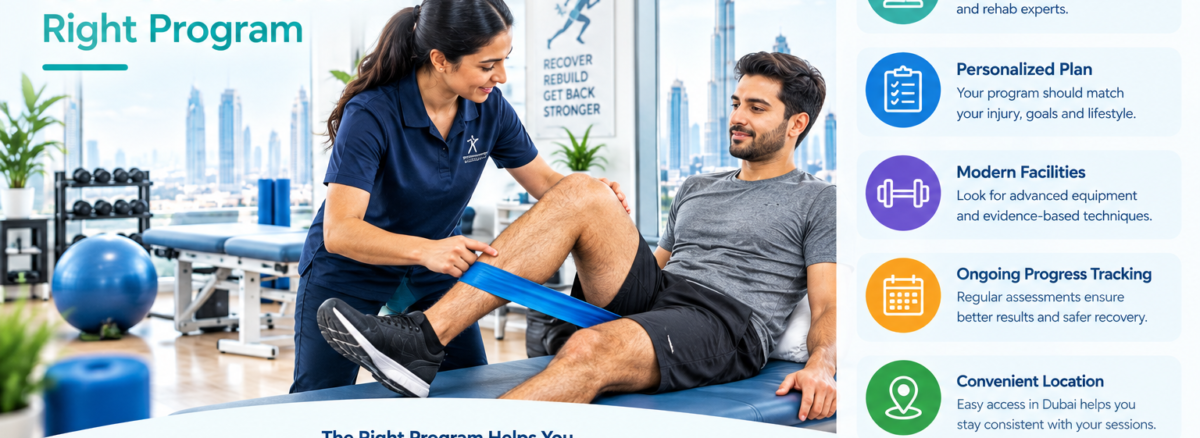
- A plan tailored specifically to your injury and goals
- Clear milestones and regular progress tracking
- Therapists experienced with your type of injury
- Flexibility to adjust the plan as your recovery progresses
- Guidance for safely returning to normal activity or sport
What Rehabilitation Therapy Should I Do After an Injury
The right therapy depends entirely on the injury itself. A ligament injury may call for a phased strengthening and stability program, while a fracture recovery might focus first on regaining range of motion before adding strength work. Rather than following generic advice, the safest approach is a professional assessment that identifies exactly what your specific injury needs at each stage of healing.
Staying Consistent Throughout Recovery
Even the best program only works if you follow it consistently. Missing sessions, skipping home exercises, or rushing back to full activity too soon are among the most common reasons recovery takes longer than expected. Choosing a program with a schedule and structure that realistically fits your life makes it far easier to stay consistent from start to finish.
The Role of Goal Setting in Recovery
A strong rehabilitation program sets clear, specific goals at each stage rather than a vague target of just “feeling better.” Early goals might focus on reducing pain and restoring basic movement, while later goals shift toward strength, endurance, and eventually returning to specific activities like sport or physically demanding work. Clear goals also make it easier for you and your therapist to recognize genuine progress, even when overall recovery still feels far from complete.
Combining Professional Treatment with Home Exercises
Much of the real progress in rehabilitation happens between formal sessions, through consistent home exercises prescribed by your therapist. Programs that provide clear, well-explained home exercises, along with a way to track your progress, tend to produce better outcomes than those relying solely on in-clinic sessions. Being honest with your therapist about how consistently you are managing home exercises also helps them adjust the plan realistically.
Knowing When a Program Needs to Change
Not every rehabilitation program gets it right on the first attempt, and that is normal. If progress stalls for several weeks despite consistent effort, or if pain increases rather than gradually easing, it is worth raising this directly with your therapist rather than assuming it is simply part of the process. A good program treats this feedback as useful information for adjusting the plan, not as a failure on your part.
Why Patience Pays Off
Rehabilitation almost always takes longer than people initially hope, and rushing the process to speed things up usually backfires. Trusting a well-designed program, even when progress feels slow in the early weeks, generally leads to a stronger and more complete recovery than trying to shortcut the process by returning to full activity too soon.
Conclusion
Choosing the right Rehabilitation Therapy Services After Injury program is just as important as getting the injury diagnosed correctly in the first place. Look for personalized assessment, experienced therapists, and a plan that adapts as you recover. GIMC’s rehabilitation team builds programs around each patient’s specific injury, helping ensure a complete and lasting return to normal activity.

Leave feedback about this