
Introduction
Recovering from an injury involves more decisions than most people expect, starting with choosing the right rehabilitation approach in the first place. Rehabilitation Therapy Services After Injury vary considerably between providers, and picking the wrong fit can slow recovery or lead to reinjury if the program is not well suited to your specific situation.
This blog walks through what to consider when choosing a rehabilitation program and how to get started with the right one.
Understanding Your Injury Before Choosing a Program
Not all injuries respond to the same kind of rehabilitation approach, and a program well suited to a sports injury may not be appropriate for a post-surgical recovery or a chronic overuse condition. A proper assessment before starting therapy ensures the program is designed around your specific diagnosis rather than a generic recovery template.
This initial assessment should also account for your personal goals, whether that is returning to competitive sport, manual work, or simply comfortable daily movement.
A thorough intake process at this stage often prevents wasted weeks on an approach that was never quite right for the injury in question.
How Do I Choose the Right Rehabilitation Therapy Program After an Injury in Dubai?
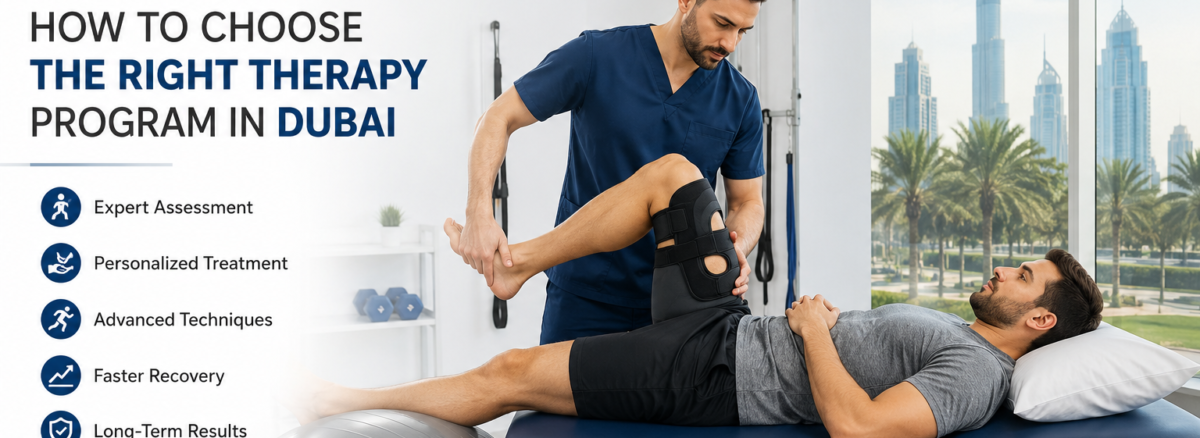
A common question is how do I choose the right rehabilitation therapy program after an injury in Dubai. Look for a provider who conducts a thorough initial assessment, explains the reasoning behind their recommended approach, and adjusts the plan as your recovery progresses rather than following a fixed, unchanging protocol regardless of how you respond to treatment.
It is also worth asking how progress will be measured throughout the program, since clear, trackable goals make it easier to stay motivated and confirm the plan is actually working.
The Importance of Progressive, Structured Programs
Effective rehabilitation programs are structured in stages, starting with pain management and gentle movement before progressing to strengthening and, eventually, function-specific training. Skipping stages or rushing through a program too quickly is one of the most common reasons injuries recur, which is why a well-structured, progressive plan matters more than how quickly it promises results.
A good therapist will resist the temptation to rush this process, even when a patient is eager to return to full activity sooner than their body is genuinely ready for.
What Rehabilitation Program Is Best After an Injury?
When people ask what rehabilitation program is best after an injury, the honest answer depends heavily on the specific injury, the patient’s goals, and their starting fitness level. A generic answer rarely applies, which is why an individualized assessment before starting treatment is so important for setting a program up to succeed.
The best program is ultimately the one designed specifically around your body, your injury, and your recovery goals, rather than any single universally recommended approach that ignores your individual circumstances.
How to Book Physiotherapy Clinic Appointment and Get Started
Once you are ready to begin, the process to Book Physiotherapy Clinic Appointment should be straightforward, without long delays or confusing paperwork getting in the way of starting treatment. A good clinic makes it easy to schedule an initial assessment quickly, since early intervention after an injury often leads to a faster, more complete recovery.
Starting sooner rather than later also helps prevent compensatory movement habits from developing, which can otherwise create secondary problems on top of the original injury.
What to Expect from Your First Rehabilitation Session
Your first session typically includes a detailed assessment of your movement, strength, and pain levels, followed by an explanation of the recommended program and its expected timeline. Patients who understand the reasoning behind their program tend to stay more engaged with the exercises prescribed for them between sessions, which meaningfully improves overall outcomes.
Staying Motivated Through a Longer Recovery
Some injuries require months rather than weeks of rehabilitation, and staying motivated over that time can be genuinely difficult. Regular reassessment, visible markers of progress, and clear communication from your therapist all help maintain motivation, turning a long recovery into a series of achievable, trackable steps rather than an open-ended commitment.
Celebrating smaller milestones along the way, rather than focusing only on the final goal, also helps patients stay engaged during the slower, less exciting middle stages of recovery.
Conclusion
Choosing the right rehabilitation program after an injury sets the tone for the entire recovery process. Rehabilitation Therapy Services After Injury that are properly assessed, structured, and progressive give patients the best chance of a full and lasting recovery.
When you are ready to start, GIMC makes it simple to Book Physiotherapy Clinic Appointment and begin your recovery with a program built specifically around your injury and your goals, supported by a team that stays with you closely at every single stage of the process.